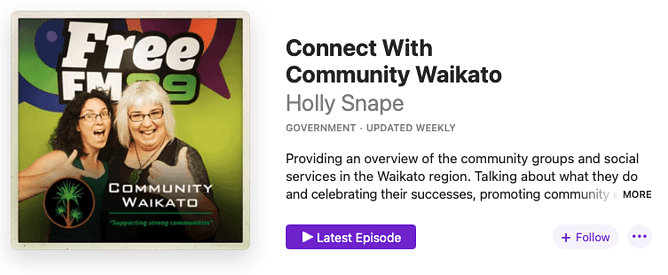
This month on FreeFM’s Connect with Community Waikato Series, I spoke[1] with Holly Snape about the Salvation Army’s Home Truths report by Alan Johnson and Major Campbell Roberts[2], and what it reveals about the deeper structure of housing in Aotearoa. This followed on from us hosting Alan in early September where he took our viewers through the report and its implications. The full recording of that webinar and his slides are on our website: https://www.wellbeingwaikato.org.nz/kainga--housing/
A central idea sits at the heart of the report: housing is a system before it is a market. What we often describe as “the housing market” is in fact the visible surface of a much deeper system—shaped by land settings, income distribution, policy design, investment behaviour, and institutional choices made over time. From that perspective, price movements and sales activity are not the system itself. They are outputs of it.
In the conversation with Holly, our key theme was how easily housing is reduced to a market story—prices up, prices down, demand versus supply. The Home Truths report pushes against this framing. It argues that while markets are visible and politically salient, they represent only a small and often misleading window into how housing actually functions in society.
Most housing activity is not transactional. It is lived: people renting, paying mortgages, staying put, sharing homes, or struggling with costs. Yet public debate is often driven by the small proportion of homes that are bought and sold each year. Alan’s point is that if we only look at that surface layer, we risk misunderstanding the system entirely.
The report makes a further important shift: housing stress is not best understood as a cyclical affordability problem. Instead, it reflects long-run structural settings that determine how housing interacts with income, wealth, and security over decades.
This includes:
how land is made available and priced
how investment flows into housing
how incomes grow relative to housing costs
and how policy settings shape long-term distributional outcomes
Rather than treating housing as a self-correcting market, the report encourages us to see it as a designed system producing predictable patterns of advantage and pressure.
Another key insight discussed in the interview is the mismatch between what dominates public debate and what most people experience. While commentary often focuses on prices and transactions, most housing outcomes are experienced outside the market: in rental stability or insecurity, housing quality, overcrowding pressures, and the day-to-day affordability of keeping a home warm, dry, and secure.
This is where the “system before market” framing becomes particularly important. It redirects attention from short-term indicators to lived conditions and long-term structural outcomes.
A consistent message from the Home Truths report is that incremental interpretation of housing pressures—treating them as temporary imbalances—risks missing the deeper reality. If housing is a system before it is a market, then persistent affordability issues are not anomalies to be corrected, but signals of how the system is configured.
That raises harder questions about structure rather than cycles: who the system is working for, who it is not, and how those outcomes are reproduced over time.
The strongest takeaway from the conversation with Holly is a simple but important shift in perspective. Housing is often discussed as if it were primarily a market problem with price signals that rise and fall. But the Home Truths framing suggests something more fundamental: housing is a system that produces those price signals in the first place.
Once that distinction is made, the conversation naturally shifts away from short-term fixes and toward deeper questions about system design. That is the space the Home Truths report invites us into—and the space our discussion on FreeFM explored.
Harvey joins Holly each month to discuss the work of Wellbeing Waikato, with a focus on new and interesting data and insights. To hear more go to: Connect With Community Waikato - Podcast - Apple Podcasts