Along with kai security and housing affordability, energy (and more particularly electricity) affordability is a key factor which influences household budgets daily. While the rapid increase in fossil fuel prices since February has made ICE vehicle fuelling more expensive; domestic, commercial and industrial power prices remain a very significant drag on business, community and household prosperity.
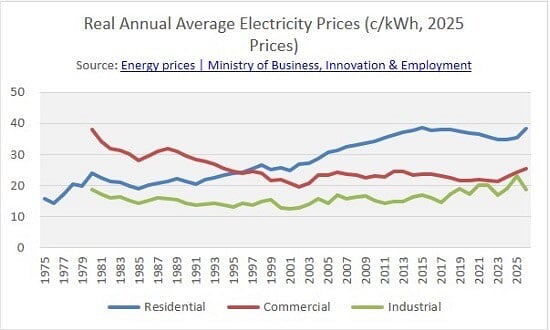
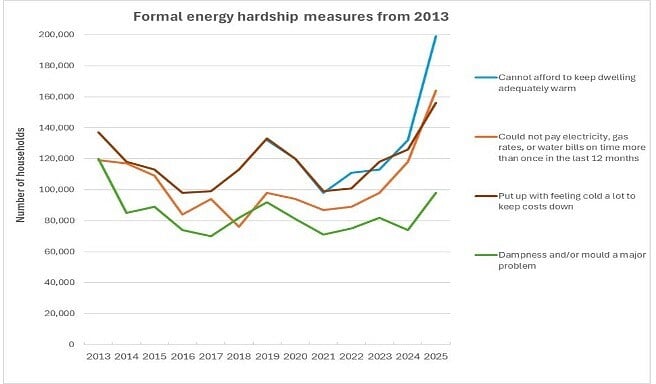
Data from MBIE and research shared by the Community Energy Network (below, note different time scales) shows the steady rise in real domestic electricity prices since the mid 1980’s (with a recent uptick after some years of decline) and since 2021, increasing energy hardship, especially in relation to the cost of home heating. This data shows that the nature of electricity affordability but also the hardship which electricity costs can impose on communities.
These are long standing issues which reflect a combination of electricity sector decentralisation, disaggregation and partial privatisation since the 1990’s, changes in demand and supply and the more recent changes in generation because of new technology, especially distributed solar. These issues and changes don’t always pull in the same direction, with some likely to lower domestic prices, while others may increase them.
In early June, we kicked off the Waikato Affordable Energy Webinar Series. The series brings together more than a dozen different experts and practitioners in the New Zealand energy system and is designed to cut through the complexity—building a clear, practical understanding of how the electricity system works, what drives reliability, sustainability and affordability, and what a more affordable and abundant future could look like. Across the series, speakers will explore 4 key questions:
How does the electricity system actually work—and why is it designed this way?
What drives prices, and how could they be made more affordable?
How does energy affordability affect household and community wellbeing?
What would a better system look like—and how do we get there?
Contributors bring a range of perspectives from across the sector. We do not expect complete agreement—and that is deliberate. This series is intended to surface different views on both the challenges and the solutions.
So far, we have hosted Geoff Bertram, economist and energy expert, Rachel Afeaki, former Chair of the WEL Energy Trust, Matt Newman from Rewiring Aotearoa, Graham Campbell and Pippa Player from Te Waihanga | New Zealand Infrastructure Commission and Jonathan Kay, an independent energy expert.
Between now and early November, we will hear from:
August
Manu Barrett, CEO: Solar Sense Ltd
Qiulae Wong, Leader: The Opportunity Party
September
Simon Bridges, CEO: Auckland Chamber of Commerce
Rob Johnson, Ezra Hirawani, Founders: Nau Mai Ra
John Campbell, CEO: Our Energy
Kelli Pike, Activator for Community Led Zero Waste: GoEco
October
Gareth Cartwright, Executive Officer: Community Energy Network
Stew Hamilton, CEO of Mercury NZ
David Wilson, Member of Parliament: New Zealand First; and
November
Blair Dickie, Principal Strategic Advisor: Waikato Regional Council
All events are streamed live and hosted by Harvey Brookes (Executive Director, Wellbeing Waikato) and Ernie Newman (Independent Competition Consultant).
At the conclusion of the series, we will release a summary report which will pull together the insights we have heard on the above 4 questions, where there is agreement and disagreement and what it means for energy and electricity policy in the Waikato region.
You are welcome to join individual sessions or follow the full series. To join the series, register here: The Waikato Affordable Energy Challenge - Webinar Series Tickets, Multiple dates | Eventbrite
All presentations will be recorded and made available here on our website here: https://www.wellbeingwaikato.org.nz/energy---pungao/
